
EMT: Anatomy Lab 3: Page 7 of 8
Percussion of the Abdomen
| 🔍 Tap on an image to enlarge: |
 |
 |
The technique of percussion is often difficult to learn.
Percussion is one of the most important techniques of physical examination. Percussion sets the chest wall or the abdominal wall and underlying tissues in motion, producing audible sound and palpable vibrations. Percussion helps you establish whether the underlying tissues are air-filled, fluid-filled, or consolidated. The percussion blow penetrates only 5 to 7 cm into the chest or abdomen, however, and will not aid in detection of deep-seated lesions.
The technique of percussion can be practiced on any surface. As you practice, listen for changes in percussion notes over different types of materials or different parts of the body. The key points for good technique, described for a right-handed person, are detailed below:
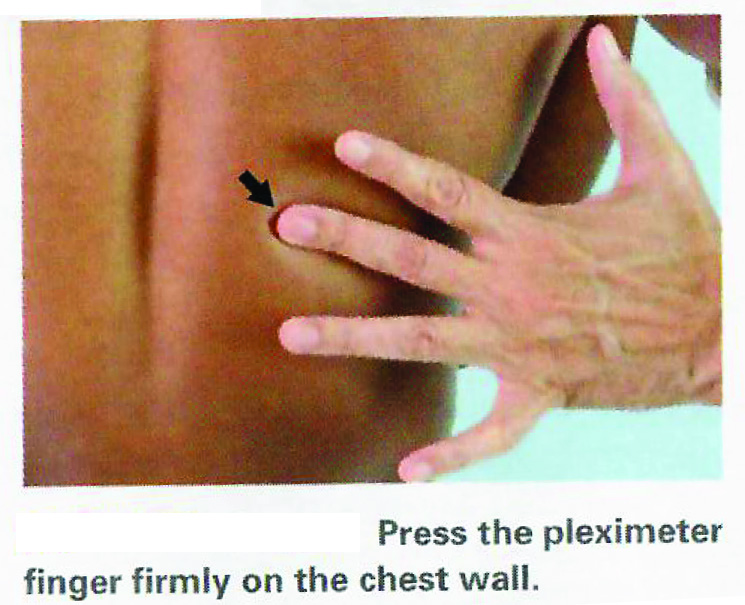
Hyperextend the middle finger of your left hand, known as the pleximeter finger. Press its distal interphalangeal joint firmly on the lung surface or abdomen to be percussed.
Avoid surface contact by any other part of the hand because this dampens out vibrations. Note that the thumb and second, fourth, and fifth fingers arc not touching the chest wall.
Let's practice percussion on the provided table top and box, and then with your standarized patient. Be sure to watch the video and use the following steps to perform the technique:
|
1. Position your right forearm quite close to the surface, with the hand cocked upward. The middle finger should be partially flexed, at a right angle to the pleximeter finger, relaxed and poised to strike. 2. With a quick sharp but relaxed wrist motion, strike the pleximeter finger with the right middle finger (the plexor finger). Aim for the distal interphalangeal joint. 3. Stike with the tip of the plexor finger not the pad of the finger. 4. Withdraw the plexor finger immediately to avoid dampening the vibrations. |
 |
Using the provided table top and box: The table top should have a dull sound. The box should have a resonant sound, like drum. With your Standardized Patient: 1. Percuss over the area of the stomach. This should sound resonant like a drum, since the gastric fundus often contains air. The same would apply for the lung. 2. Percuss over the left lower quadrant. This should have less resonance because there is less air. 3. Percuss over the liver. This should sound dull |
In summary, this is a sharp flicking motion of the plexor finger against the pleximeter to induce vibrations.