
Thoracic Wall: Page 3 of 5
Respiration (inspiration and expiration) is performed with the following muscles:
Inspiration:
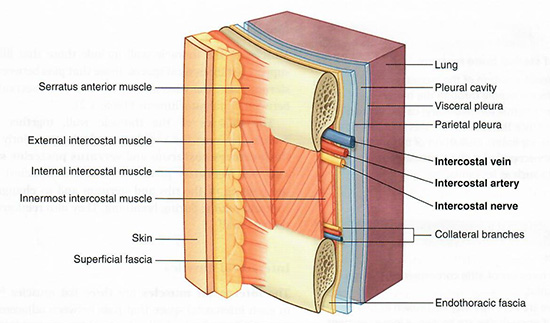 |
| Tap on image to enlarge |
| Add the diaphragm which contracts and creates negative pressure. | |
| Add the internal intercostal muscles. | |
| Add the external intercostal muscles. |
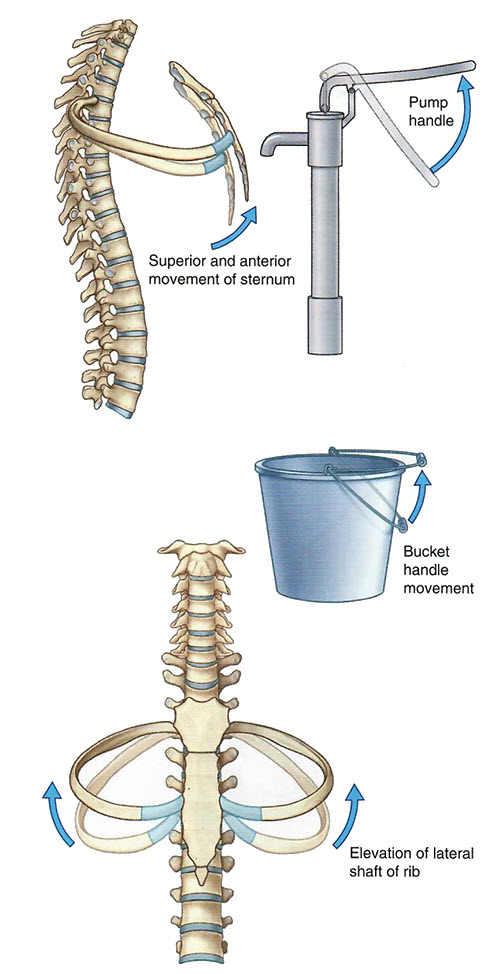 |
| Tap on image to enlarge |
The intercostal muscles contract and stiffen the rib cage to counter negative pressure, along with lifting and rotating ribs 2 through 10 to increase the thoracic volume.
Think of the movement of the intercostal muscles as a combination of a pump lever and a bucket handle maneuver to increase thoracic volume.
The lungs passively inflate during this part of the cycle.
Forced inspiration is accomplished by adding the following muscles:
Neck and back muscles combine to elevate the pectoral girdle and thereby increase the cross sectional area of the thorax. Extending the back increases the rostral-caudal length.
Upper respiratory tract muscles relax and decrease upper airway resistance.